
Tokyo Customized Tour & Kimono with Licensed Guide
Traveler rating
Not yet rated
No traveler reviews have been published for this experience yet.
Quick answer
Is Tokyo Customized Tour & Kimono with Licensed Guide worth booking?
Tokyo Customized Tour & Kimono with Licensed Guide is a 6-hour experience in Tokyo, Japan, from ¥15,200 per person. It scores 54 out of 100 on the Outty Ranking, which we label “Worth a Look”. Cancellation is free up to 24 hours before the start time. Same-day spots are currently showing.
- Outty Ranking
- 54 / 100
- Rating
- Not yet rated
- Duration
- 6 hours
- From
- ¥15,200 per person
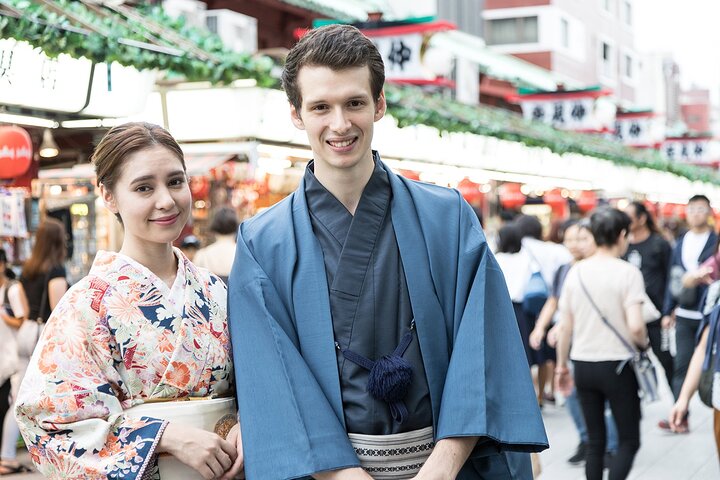
Kimono is the beautiful traditional dress of Japan! On this tour, you can experience wearing a Kimono. You will be dressed by a professional and have your hair done in a simple hairstyle. It will take about one hour to change for one group (including hair-set for women). After getting dressed, you can head out on your tour wearing the kimono. Bring your own camera! Your tour will be of 2 to 3 sights that you decide on with your guide from the itinerary list. Sizes: Kimonos are sizes S to 3L. If you cannot find a perfect fit Kimono, the professional staff can dress you in the Kimono as best as they can. For the men's kimono, lengths more than 190cm will incur an additional cost of 3300 JPY. Please pay the additional fee directly to the kimono shop staff. Please let us know the number of male and female participants in your group. Kimono returning: Please make sure to return it by 5pm.
What you get
- Kimono wearing experience
- Meet up with guide on foot within designated area of Tokyo
- Customizable Tour of your choice of 2-3 sites from 'Itinerary' list
- Licensed Local English Speaking Guide
About this experience
Kimono is the beautiful traditional dress of Japan! On this tour, you can experience wearing a Kimono. You will be dressed by a professional and have your hair done in a simple hairstyle. It will take about one hour to change for one group (including hair-set for women). After getting dressed, you can head out on your tour wearing the kimono. Bring your own camera! Your tour will be of 2 to 3 sights that you decide on with your guide from the itinerary list. Sizes: Kimonos are sizes S to 3L. If you cannot find a perfect fit Kimono, the professional staff can dress you in the Kimono as best as they can. For the men's kimono, lengths more than 190cm will incur an additional cost of 3300 JPY. Please pay the additional fee directly to the kimono shop staff. Please let us know the number of male and female participants in your group. Kimono returning: Please make sure to return it by 5pm.
What's included
Included
- Kimono wearing experience
- Meet up with guide on foot within designated area of Tokyo
- Customizable Tour of your choice of 2-3 sites from 'Itinerary' list
- Licensed Local English Speaking Guide
Not included
- Transportation fees, Entrance fees, Lunch, and Other personal expenses
- Private Vehicle
- You cannot combine multiple tour groups.
- Guide Entry fees are only covered for sights listed under 'Itinerary' list.
What you'll see and do
Jidaiya's Japanese culture experience programs are for those seeking for a good alternative of Asakusa sightseeing and for the people who wish to have more profound and authentic Japanese experience. After getting dressed, you can head out on your tour wearing the kimono. Please make sure to return it by 5pm.
60 minutes here
Asakusa
Asakusa is the center of Tokyo's shitamachi (literally "low city"), one of Tokyo's districts, where an atmosphere of the Tokyo of past decades survives. Asakusa's main attraction is Sensoji, a very popular Buddhist temple, built in the 7th century. The temple is approached via the Nakamise, a shopping street that has been providing temple visitors with a variety of traditional, local snacks and tourist souvenirs for centuries.
30 minutes here
Senso-ji Temple
Sensoji (浅草寺, Sensōji, also known as Asakusa Kannon Temple) is a Buddhist temple located in Asakusa. It is one of Tokyo's most colorful and popular temples. The legend says that in the year 628, two brothers fished a statue of Kannon, the goddess of mercy, out of the Sumida River, and even though they put the statue back into the river, it always returned to them. Consequently, Sensoji was built nearby for the goddess of Kannon. The temple was completed in 645, making it Tokyo's oldest temple.
15 minutes here
Tsukiji Fish Market
Explore the old fish market in Tokyo!
30 minutes here
Meiji Jingu Shrine
Meiji Shrine (明治神宮, Meiji Jingū) is a shrine dedicated to the deified spirits of Emperor Meiji and his consort, Empress Shoken. Located just beside the JR Yamanote Line's busy Harajuku Station, Meiji Shrine and the adjacent Yoyogi Park make up a large forested area within the densely built-up city. The spacious shrine grounds offer walking paths that are great for a relaxing stroll. The shrine was completed and dedicated to the Emperor Meiji and the Empress Shoken in 1920, eight years after the passing of the emperor and six years after the passing of the empress. The shrine was destroyed during the Second World War but was rebuilt shortly thereafter.
30 minutes here
Shinjuku Gyoen National Garden
Shinjuku Gyoen is one of Tokyo's largest and most popular parks. Located a short walk from Shinjuku Station, the park's spacious lawns, meandering walking paths and tranquil scenery provide a relaxing escape from the busy urban center around it. In spring Shinjuku Gyoen becomes one of the best places in the city to see cherry blossoms. Adults \500 (Group discount \400) Seniors (65 and over) \250 ※Valid ID required. Please purchase a ticket at a staffed counter. Students \250 ※Valid Student ID required. Please purchase a ticket at a staffed counter. Children (junior high school students /15 and under) FREE
5 minutes here · Admission not included
Koishikawa Korakuen Garden
Koishikawa Korakuen is one of Tokyo's oldest and best Japanese gardens. It was built in the early Edo Period (1600-1867) at the Tokyo residence of the Mito branch of the ruling Tokugawa family. Like its namesake in Okayama, the garden was named Korakuen after a poem encouraging a ruler to enjoy pleasure only after achieving happiness for his people. Koishikawa is the district in which the garden is located in. Admission fee Adult: 300 JPY Children and senior (+65): 150 JPY
5 minutes here · Admission not included
Hamarikyu Gardens
Hama Rikyu is a large, attractive landscape garden in central Tokyo. Located alongside Tokyo Bay, Hama Rikyu features seawater ponds which change level with the tides, and a teahouse on an island where visitors can rest and enjoy the scenery. The traditionally styled garden stands in stark contrast to the skyscrapers of the adjacent Shiodome district. Admission fee Adult: 300JPY Senior(+65): 150JPY Children 12 and under: Free
5 minutes here · Admission not included
Imperial Palace
**This tour does not include access to the inside of the Imperial Palace** The current Imperial Palace is located on the former site of Edo Castle, a large park area surrounded by moats and massive stone walls in the center of Tokyo, a short walk from Tokyo Station. It is the residence of Japan's Imperial Family. Edo Castle used to be the seat of the Tokugawa shogun who ruled Japan from 1603 until 1867. In 1868, the shogunate was overthrown, and the country's capital and imperial residence were moved from Kyoto to Tokyo. In 1888 construction of a new Imperial Palace was completed. The palace was once destroyed during World War Two, and rebuilt in the same style, afterwards.
30 minutes here
Rikugien Garden
Rikugien is often considered Tokyo's most beautiful Japanese landscape garden alongside Koishikawa Korakuen. Built around 1700 for the 5th Tokugawa Shogun, Rikugien literally means "six poems garden" and reproduces in miniature 88 scenes from famous poems. The garden is a good example of an Edo Period strolling garden and features a large central pond surrounded by manmade hills and forested areas, all connected by a network of trails. Admission fee Adult: 300 JPY Senior(+65): 150 JPY Children (12 and under): Free
30 minutes here · Admission not included
Akihabara
Akihabara (秋葉原), also called Akiba after a former local shrine, is a district in central Tokyo that is famous for its many electronics shops. In more recent years, Akihabara has gained recognition as the center of Japan's otaku (diehard fan) culture, and many shops and establishments devoted to anime and manga are now dispersed among the electronic stores in the district. On Sundays, Chuo Dori, the main street through the district, is closed to car traffic from 13:00 to 18:00 (until 17:00 from October through March).
5 minutes here
Takeshita Street
Harajuku (原宿) refers to the area around Tokyo's Harajuku Station, which is between Shinjuku and Shibuya on the Yamanote Line. It is the center of Japan's most extreme teenage cultures and fashion styles, but also offers shopping for adults and some historic sights. The focal point of Harajuku's teenage culture is Takeshita Dori (Takeshita Street) and its side streets, which are lined by many trendy shops, fashion boutiques, used clothes stores, crepe stands and fast food outlets geared towards the fashion and trend conscious teens.
30 minutes here
Nezu
Having miraculously avoided major damage during world wars and natural disasters, Yanaka and Nezu—two of the neighborhoods that make up shitamachi, Tokyo's old downtown—retain their last-century charm. You'll find historical sites such as Yanaka Cemetery and Nezu Shrine tucked away among shitamachi's narrow back alleys, traditional wooden houses, izakaya pubs, atmospheric coffee shops and retro stores selling old-style sweets and snacks. Here you can slip back in time to a slower-paced, more genteel Tokyo.
5 minutes here
Shinjuku Golden Gai
Golden Gai is said to have started around 1950 when the black market that had arisen in front of Shinjuku Station moved and, in this new area, a number of eating and drinking establishments set up shop. Although Shinjuku has undergone considerable modernization since then, Golden Gai seems to have remained largely unchanged. The alley is narrow and cramped with countless signs advertising the various establishments that line the way. Many of the buildings themselves are made of wood, remnants hanging on from the Showa Era. Most measure only around thirteen square meters (one hundred forty-two square feet). It's a dim, boisterous place filled with the aromatic smoke of grilling meats. Yet despite the nearly endless number of slick new restaurants available in Shinjuku, this little alley continues to draw the attention of foreign tourists. Golden Gai is a popular “un-touristy” tourist spot.
5 minutes here
Yoyogi Park
Yoyogi Park (代々木公園, Yoyogi Kōen) is one of Tokyo's largest city parks, featuring wide lawns, ponds and forested areas. It is a great place for jogging, picnicking and other outdoor activities. Although Yoyogi Park has relatively few cherry trees compared to other sites in Tokyo, it makes for a nice cherry blossom viewing spot in spring. Furthermore, it is known for its ginko tree forest, which turns intensely golden in autumn.
30 minutes here
Where it starts and ends
Hotel pickup
Pickup is included for all travelers. Pickup begins about 5 minutes before departure.
Before you book
- Cancellation
- For a full refund, cancel at least 24 hours before the scheduled departure time.
- Languages
- ja, en
- Ticket
- Mobile Only
- Runs on
- Every day
- Group size
- Up to 10 travelers per booking
- Operated by
- Japan Guide Agency
Know before you go
- Service animals allowed
- Public transportation options are available nearby
- Infants and small children can ride in a pram or stroller
- All areas and surfaces are wheelchair accessible
- Transportation options are wheelchair accessible
- Wheelchair accessible
- Suitable for all physical fitness levels
Photos


Good to know
- Duration
- 6 hours
- Free cancellation
- Up to 24h before
- Minimum age to book
- All ages
- Availability
- Bookable today
- Runs on
- Every day
- Price range
- ¥15,200 to ¥45,900
- Hotel pickup
- Included for all travelers
- Booked in 30 days
- 0
- Verdict
- Worth a Look
Who runs this experience
Operated by Japan Guide Agency, who run 223 experiences we rank across 11 cities, with an average Outty Ranking of 64.1 and 6 in the 90+ Club.
See everything Japan Guide Agency runsWhy this scores 54
The Outty Ranking is a weighted composite. Here is how this experience performed on each component.
Tokyo Customized Tour & Kimono with Licensed Guide: questions travelers ask
Practical detail on this experience, plus the wider planning questions for Tokyo.
How much does Tokyo Customized Tour & Kimono with Licensed Guide cost?
+
Prices start at ¥15,200 per person. The final price depends on the date, the time slot and the number of travelers, and peak weekends in Tokyo usually price higher than midweek mornings. Live pricing and remaining availability are confirmed on the booking screen before you pay.
How long does Tokyo Customized Tour & Kimono with Licensed Guide take?
+
Plan for about 6 hours from start to finish, not counting travel to the meeting point. Most travelers leave another 30 minutes on either side so the rest of the day in Tokyo is not rushed.
Is Tokyo Customized Tour & Kimono with Licensed Guide worth it?
+
It holds an Outty Ranking of 54 out of 100, which we label "Worth a Look". That score blends traveler sentiment (0/5 across 0 reviews), the depth of that review evidence, recent booking momentum, value for money against comparable last minute in Tokyo, and how flexible the cancellation terms are.
Can I cancel or reschedule Tokyo Customized Tour & Kimono with Licensed Guide?
+
Yes. Cancel free up to 24 hours before the start time for a full refund. Inside that window the booking is non-refundable, and no-shows are not refunded.
Is Tokyo Customized Tour & Kimono with Licensed Guide suitable for kids and families?
+
Yes, all ages are welcome. Families should still weigh the 6-hour running time, and strollers are easier on the earlier, quieter departures.
How far in advance should I book Tokyo Customized Tour & Kimono with Licensed Guide?
+
Around 0 people booked this in the last 30 days, so popular slots go early. Two to three weeks ahead is comfortable in shoulder season, while summer weekends and holidays in Tokyo can sell out a month out. Same-day spots do open up when other travelers cancel, so it is worth checking if you are already in town.
What should I bring or wear?
+
Bring photo ID, your booking confirmation on your phone, a refillable water bottle and comfortable shoes. Dress for the weather in Tokyo and add a light layer if any part of the 6-hour experience runs outdoors or after sunset.
Where does Tokyo Customized Tour & Kimono with Licensed Guide start and how do I get there?
+
The exact meeting point and directions are on your voucher once you book, and they sit in central Tokyo within reach of public transport. Arrive 15 minutes early: late arrivals are treated as no-shows by most operators.
What are the best things to do in Tokyo?
+
Tokyo is less a city than a stack of neighborhoods with completely different opening hours. A guided food crawl through Shinjuku's Omoide Yokocho gets you past the no-tourist curtains, while the day trips west to Hakone and Fuji need an early start to be worth the fare. Our ranking weighs guide quality heavily here, because in Tokyo the guide is the product. On Outty we rank every Tokyo experience on the same 0 to 100 scale, and alongside this one the highest scorers right now include Best of Shinjuku: Izakaya Food Tour (3-4 Stops, 14+ Tastings), Tokyo: Asakusa Senso-ji Temple & Old Town Walking Tour, Matcha Making Class in Tokyo with Authentic Japanese Sweets Set. The city page groups everything into most popular, highest reviewed, last minute and family-friendly so you can build a day around what actually delivers.
When is the best time to visit Tokyo?
+
Late March to May for blossom, October to November for clear Fuji views. Booking patterns follow the same curve: prices and queues climb in peak weeks, while shoulder season gives you better availability on the top-ranked experiences and more room to change plans.
How many days do you need in Tokyo?
+
Three full days covers the headline sights without sprinting. A workable rhythm is one anchor experience each morning, such as this one, an unhurried afternoon in a single neighborhood, then a food or nightlife booking in the evening. Five days lets you add a day trip outside the city.
Do I book through Outty or through the operator?
+
Outty ranks and explains the experiences, then hands you to Viator to complete the booking with the operator directly. The price is the same as booking on Viator yourself, and Outty earns an affiliate commission on the referral, which is how the rankings stay free to read.
What is included in Tokyo Customized Tour & Kimono with Licensed Guide?
+
Included: Kimono wearing experience; Meet up with guide on foot within designated area of Tokyo; Customizable Tour of your choice of 2-3 sites from 'Itinerary' list; and Licensed Local English Speaking Guide. Not included: Transportation fees, Entrance fees, Lunch, and Other personal expenses; Private Vehicle; You cannot combine multiple tour groups; and Guide Entry fees are only covered for sights listed under 'Itinerary' list. Always check the voucher for the final list before you travel.
Does Tokyo Customized Tour & Kimono with Licensed Guide include hotel pickup?
+
Yes, pickup is offered for every traveler from 1071 listed pickup locations in and around Tokyo. Be ready about 5 minutes before the start time.
What languages is Tokyo Customized Tour & Kimono with Licensed Guide offered in?
+
It is offered in Japanese and English. Pick your language when choosing a date and time, as not every departure runs in every language.
Will I get instant confirmation and a mobile ticket for Tokyo Customized Tour & Kimono with Licensed Guide?
+
Confirmation is sent by the operator after booking, usually within 48 hours; if it is not confirmed you are not charged. Mobile tickets are accepted, so you can show the voucher on your phone.
Is Tokyo Customized Tour & Kimono with Licensed Guide wheelchair or stroller accessible?
+
The operator notes: Infants and small children can ride in a pram or stroller; All areas and surfaces are wheelchair accessible; Transportation options are wheelchair accessible; and Wheelchair accessible. If accessibility is critical, contact the operator after booking to confirm arrangements for your date.
What happens to Tokyo Customized Tour & Kimono with Licensed Guide if the weather is bad?
+
It generally runs rain or shine, so dress for the forecast in Tokyo. Standard cancellation terms apply: free cancellation up to 24 hours before the start.
Ready to lock in your spot?
Pick a date, choose your group, and see the exact price for Tokyo Customized Tour & Kimono with Licensed Guide.
Pick your date


