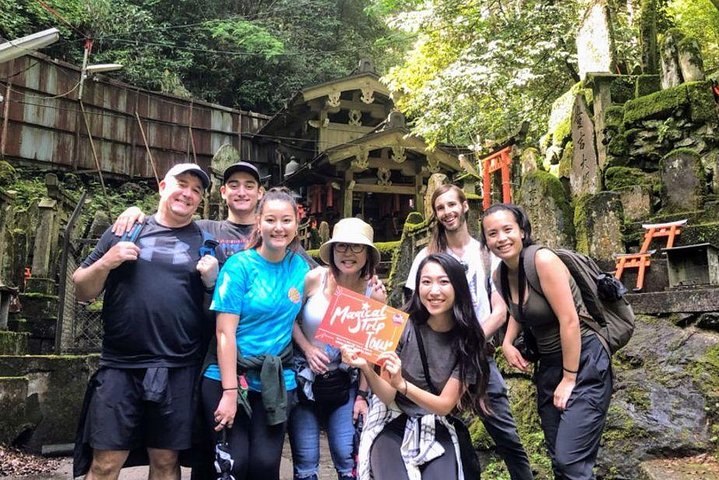
Kyoto Early Morning Customized Tour with Licensed Guide
Traveler rating
4.8/5
Based on 42 traveler reviews. Ratings and reviews provided by Viator and Tripadvisor.
Quick answer
Is Kyoto Early Morning Customized Tour with Licensed Guide worth booking?
Kyoto Early Morning Customized Tour with Licensed Guide is a 4-hour experience in Kyoto, Japan, from ¥5,600 per person. It scores 62 out of 100 on the Outty Ranking, which we label “Solid Choice”, based on a 4.8/5 rating across 42 reviews. Cancellation is free up to 24 hours before the start time. Same-day spots are currently showing.
- Outty Ranking
- 62 / 100
- Rating
- 4.8/5 (42)
- Duration
- 4 hours
- From
- ¥5,600 per person
In this tour, we start early to beat the crowds. Temples, shrines, and tea ceremonies. The traditions of ancient Japan are still alive and well in the old capitol, Kyoto. Walking around this beautiful city can feel like you are in a time machine as its architecture has been preserved for centuries. There is much history in this city that you don’t want to miss so book our Government Licensed and Experienced English-speaking guides for a walking tour of Kyoto! Once your reservation is made, a guide will be in touch to plan your personalized tour. Choose 2 to 3 spots that you wish to visit and your guide will plan a personalized itinerary. If you do not know where to visit, ask the guide to send you their recommended itinerary based on your interests. Whether you are a history buff, love the beauty of old Japanese architecture, or just want to enjoy a green tea parfait, Kyoto has something for you!
What you get
About this experience
In this tour, we start early to beat the crowds. Temples, shrines, and tea ceremonies. The traditions of ancient Japan are still alive and well in the old capitol, Kyoto. Walking around this beautiful city can feel like you are in a time machine as its architecture has been preserved for centuries. There is much history in this city that you don’t want to miss so book our Government Licensed and Experienced English-speaking guides for a walking tour of Kyoto! Once your reservation is made, a guide will be in touch to plan your personalized tour. Choose 2 to 3 spots that you wish to visit and your guide will plan a personalized itinerary. If you do not know where to visit, ask the guide to send you their recommended itinerary based on your interests. Whether you are a history buff, love the beauty of old Japanese architecture, or just want to enjoy a green tea parfait, Kyoto has something for you!
What's included
Included
- Meet up with guide on foot within designated area of Kyoto
- Licensed Local English Speaking Guide
- Customizable Tour of your choice of 2-3 sites from 'What to expect' list
Not included
- You cannot combine multiple tour groups.
- Guide Entry fees are only covered for sights listed under What to Expect.
- Private Vehicle
- Transportation fees, Entrance fees, Lunch, and Other personal expenses
What you'll see and do
Fushimi Inari-taisha Shrine
We are here to help you discover new things, the Fushimi Inari Shrine is so more than its famous tunnels of vermillion-red torii gates. Most people are satisfied by a scenic view of it. But this has a lot of stories to tell that will connect you to the Japan's history and culture and your guide will show you deeper. You will see a fascinating story attached to the origin of the shrine dedicated to the god of grains – that’s what “Inari” means – . This is also why you’ll see statues of the fox around the shrine. “Kitsune” or the fox is a servant to the god Inari. They are cunning tricksters, clever minded animals who make perfect guides for the treacherous business world. You may would want the foxes on your side after this tour.
1 minutes here
Nijo Castle
Nijo Castle, a UNESCO World Heritage site was built in 1603 as the Kyoto residence of Tokugawa Ieyasu, the first shogun of the Edo Period (1603-1867).
1 minutes here · Admission not included
Gion
Exploring the narrow alleyways of Kyoto’s Geisha District—Gion can be daunting for a first-time visitor. Eliminate the worry of getting lost by going on a guided tour. It’s a great way to discover hidden places that locals love, and to hear about Kyoto’s ancient past. Highlights include learning about Geisha culture and rituals, and visiting Gion, Pontocho, and Miyagawacho.
1 minutes here
Nishiki Market Shopping District
Nishiki Market (錦市場, Nishiki Ichiba) is a narrow, five block long shopping street lined by more than one hundred shops and restaurants. Known as "Kyoto's Kitchen", this lively retail market specializes in all things food related, like fresh seafood, produce, knives and cookware, and is a great place to find seasonal foods and Kyoto specialties, such as Japanese sweets, pickles, dried seafood and sushi. Nishiki Market has a pleasant but busy atmosphere that is inviting to those who want to explore the variety of culinary delights that Kyoto is famous for. The stores found throughout the market range in size from small narrow stalls to larger two story shops. Most specialize in a particular type of food, and almost everything sold at the market is locally produced and procured.
3 minutes here
Kiyomizu-dera Temple
Discover one of Kyoto’s most popular temples—Kiyomizu-dera Temple. Exploring the temple grounds with a guide means you’ll be able to learn about Japan’s history and culture as you explore the magnificent building. Enjoy commentary from your English-speaking guide who will make sure you don't miss any important features.
3 minutes here · Admission not included
Kyoto Imperial Palace
The Kyoto Imperial Palace (京都御所, Kyōto Gosho) used to be the residence of Japan's Imperial Family until 1868, when the emperor and capital were moved from Kyoto to Tokyo. It is located in the spacious Kyoto Imperial Park (京都御苑, Kyōto Gyoen), an attractive park in the center of the city that also encompasses the Sento Imperial Palace and a few other attractions.
3 minutes here · Admission not included
Pontocho
Pontocho (先斗町, Pontochō) is one of Kyoto's most atmospheric dining areas. It is a narrow alley running from Shijo-dori to Sanjo-dori, one block west of Kamogawa River. The alley is packed with restaurants on both sides offering a wide range of dining options from inexpensive yakitori to traditional and modern Kyoto cuisine, foreign cuisine and highly exclusive establishments that require the right connections and a fat wallet. Business hours and closing days of the restaurants, bars and shops along Pontocho vary by establishment, but most places are usually open from around 17:00 to 23:00. Some also open for lunch. An increasing number of establishments offer English menus.
3 minutes here
The Higashiyama District (東山) along the lower slopes of Kyoto's eastern mountains is one of the city's best preserved historic districts. It is a great place to experience traditional old Kyoto, especially between Kiyomizudera and Yasaka Shrine, where the narrow lanes, wooden buildings and traditional merchant shops invoke a feeling of the old capital city. Recent renovations to remove telephone poles and repave the streets have further improved the traditional feel of the district.
3 minutes here
Ginkakuji Temple
Ginkakuji (銀閣寺, Silver Pavilion) is a Zen temple along Kyoto's eastern mountains (Higashiyama). In 1482, shogun Ashikaga Yoshimasa built his retirement villa on the grounds of today's temple, modeling it after Kinkakuji (Golden Pavilion), his grandfather's retirement villa at the base of Kyoto's northern mountains (Kitayama). The villa was converted into a Zen temple after Yoshimasa's death in 1490. As the retirement villa of an art obsessed shogun, Ginkakuji became a center of contemporary culture, known as the Higashiyama Culture in contrast to the Kitayama Culture of his grandfather's times. Unlike the Kitayama Culture, which remained limited to the aristocratic circles of Kyoto, the Higashiyama Culture had a broad impact on the entire country. The arts developed and refined during the time include the tea ceremony, flower arrangement, noh theater, poetry, garden design and architecture.
3 minutes here · Admission not included
Nanzenji Suirokaku
Nanzenji Temple (南禅寺), whose spacious grounds are located at the base of Kyoto's forested Higashiyama mountains, is one of the most important Zen temples in all of Japan. It is the head temple of one of the schools within the Rinzai sect of Japanese Zen Buddhism and includes multiple subtemples, that make the already large complex of temple buildings even larger. The history of Nanzenji dates back to the mid 13th century, when the Emperor Kameyama built his retirement villa at the temple's present location and later converted it into a Zen temple. After its founding, Nanzenji grew steadily, but its buildings were all destroyed during the civil wars of the late Muromachi Period (1333-1573). The oldest of the current buildings was built after that period.
3 minutes here · Admission not included
Tofuku-ji Temple
Tofukuji (東福寺, Tōfukuji) is a large Zen temple in southeastern Kyoto that is particularly famous for its spectacular autumn colors. The temple was founded in 1236 at the behest of the powerful Fujiwara clan. Its name is a combination of the names of two great temples in Nara that were also associated with the Fujiwara, Todaiji Temple and Kofukuji Temple. Tofukuji has historically been one of the principal Zen temples in Kyoto, and is a head temple of one of the schools of the Rinzai sect of Zen Buddhism. In autumn, people come from all over Japan to see Tofukuji's autumn colors. The most popular view is of the Tsutenkyo Bridge, which spans a valley of lush maple trees. The view from the bridge is equally spectacular, and the 100 meter long, covered walkway becomes extremely crowded when the colors reach their peak, usually around mid to late November.
3 minutes here · Admission not included
Toji
Toji Temple (東寺, Tōji), literally "East Temple", was founded at the beginning of the Heian Period just after the capital was moved to Kyoto in the late 700s. The large temple, together with its now defunct sister temple Saiji ("West Temple"), flanked the south entrance to the city and served as the capital's guardian temples. Toji Temple is one of Kyoto's many UNESCO world heritage sites. About thirty years after the temple's establishment, Kobo Daishi, the founder of the Shingon sect of Japanese Buddhism, was appointed head priest of Toji, and the temple became one of the most important Shingon temples besides the sect's headquarters on Mount Koya. Kobo Daishi also added many of the large wooden buildings that stand on the grounds today.
3 minutes here
Kinkakuji Temple
Kinkakuji (金閣寺, Golden Pavilion) is a Zen temple in northern Kyoto whose top two floors are completely covered in gold leaf. Formally known as Rokuonji, the temple was the retirement villa of the shogun Ashikaga Yoshimitsu, and according to his will it became a Zen temple of the Rinzai sect after his death in 1408. Kinkakuji was the inspiration for the similarly named Ginkakuji (Silver Pavilion), built by Yoshimitsu's grandson, Ashikaga Yoshimasa, on the other side of the city a few decades later. Kinkakuji is an impressive structure built overlooking a large pond, and is the only building left of Yoshimitsu's former retirement complex. It has burned down numerous times throughout its history including twice during the Onin War, a civil war that destroyed much of Kyoto; and once again more recently in 1950 when it was set on fire by a fanatic monk. The present structure was rebuilt in 1955.
30 minutes here · Admission not included
Ninna-ji Temple
Ninnaji (仁和寺) is one of the many great temples in Kyoto which are listed as World Heritage Sites. It is the head temple of the Omuro School of the Shingon sect of Buddhism and was founded in 888 by the reigning emperor. Over many centuries, a member of the Imperial Family used to serve as Ninnaji's head priest, and the temple was also known as Omuro Imperial Palace. Due to the many wars and fires that ravaged Kyoto throughout its history, none of the buildings from the temple's foundation in the 9th century still survive. The oldest buildings date back to the beginning of the Edo Period in the early 1600s, including the main hall (Kondo), the Kannon Hall, the Niomon front gate, the Chumon inner gate and the five storied pagoda.
3 minutes here · Admission not included
Shugakuin Imperial Villa
Shugakuin Imperial Villa (修学院離宮, Shugakuin Rikyū) was built in the 17th century by Emperor Gomizuno and is now managed by the Imperial Household Agency. It consists of the Upper, Middle and Lower Villa areas, each featuring gardens and buildings of the traditional imperial style. Shugakuin's name comes from a former temple built on the same site in the tenth century. The Imperial Villa was constructed between 1655 and 1659, with a palace for Gomizuno's daughter added ten years later. More recently in 1964, the surrounding farmlands were bought by the Imperial Household Agency. They are leased out to local farmers who continue to work the fields.
30 minutes here · Admission not included
Kibune River
Kibune (貴船) is a small town in a forested valley in the northern mountains of Kyoto City, which developed around Kifune Shrine. According to legend, a goddess traveled in a boat from Osaka all the way up the river into the mountains north of Kyoto, and Kifune Shrine was built at the site where her boat journey had come to an end. Kifune Shrine is dedicated to the god of water and rain and believed to be the protector of those at sea. Here you can obtain a unique type of fortune written on paper slips (omikuji) that reveal their messages when dipped into water. Okunomiya, the inner sanctum and original site of Kifune Shrine, lies about one kilometer further up the valley. It has a large rock, known as the boat stone, which is said to be where the goddess' yellow boat is buried.
30 minutes here · Admission not included
Kurama-dera
Kurama (鞍馬) is a rural town in the northern mountains of Kyoto City, less than one hour from the city center. Kurama is best known for its temple Kurama-dera and its hot spring, one of the most easily accessible hot springs from Kyoto. Outdoor and indoor baths can be enjoyed at Kurama Onsen, a ryokan located at the upper end of the town of Kurama. It can be reached in a 10 minute walk from the train station along the town's only road or along a nature trail following the river. Staying guests can use the baths for free, while daytrippers pay 2500 yen(Weekday), 2700 yen(Weekend) to use all of the baths or 1400 yen(Weekday), 1600 yen(Weekend) for just the outdoor bath (rotemburo).
3 minutes here · Admission not included
Ryoan-ji Temple
Ryoanji Temple (龍安寺, Ryōanji) is the site of Japan's most famous rock garden, which attracts hundreds of visitors every day. Originally an aristocrat's villa during the Heian Period, the site was converted into a Zen temple in 1450 and belongs to the Myoshinji school of the Rinzai sect of Zen Buddhism, whose head temple stands just a kilometer to the south. As for the history of Ryoanji's famous rock garden, the facts are less certain. The garden's date of construction is unknown and there are a number of speculations regarding its designer. The garden consists of a rectangular plot of pebbles surrounded by low earthen walls, with 15 rocks laid out in small groups on patches of moss. An interesting feature of the garden's design is that from any vantage point at least one of the rocks is always hidden from the viewer.
30 minutes here · Admission not included
Arashiyama
Arashiyama (嵐山) is a pleasant, touristy district in the western outskirts of Kyoto. The area has been a popular destination since the Heian Period (794-1185), when nobles would enjoy its natural setting. Arashiyama is particularly popular during the cherry blossom and fall color seasons. The Togetsukyo Bridge is Arashiyama's well known, central landmark. Many small shops, restaurants and other attractions are found nearby, including Tenryuji Temple, Arashiyama's famous bamboo groves and pleasure boats that are available for rent on the river.
3 minutes here · Admission not included
Katsura Imperial Villa
Katsura Imperial Villa (桂離宮, Katsura Rikyū) is one of the finest examples of Japanese architecture and garden design. The villa and garden in their present form were completed in 1645 as the residence for the Katsura Family, members of Japan's Imperial Family. Visiting Katsura Imperial Villa requires joining a tour. The tour follows the garden's circular walking trail around the central pond. Palace buildings can be viewed only from the outside, and photographing is allowed only from designated spots. Tours in English are available.
3 minutes here · Admission not included
Daikaku-ji Temple
Daikakuji (大覚寺) is a large temple in the northern part of Kyoto's Sagano district. It was originally built in the early 800s as the detached palace of Emperor Saga, who thoroughly enjoyed spending time in this calm area on the outskirts of Kyoto. Thirty years after the emperor's death, the palace was converted into a temple and has since been one of the highest ranked temples of Shingon Buddhism. Daikakuji has had a role in several significant historical events. A succession of retired emperors reigned from here, and in the 12th century the temple hosted peace talks that reunited the Northern and Southern Imperial Courts after 50 years of civil war. Daikakuji is also featured in the Tale of Genji, the first novel in Japanese literature. Today, the temple is one of the best places to still feel the ancient court atmosphere described in the novel and is often used for filming historical dramas.
3 minutes here · Admission not included
Tenryu-ji Temple
Tenryuji (天龍寺, Tenryūji) is the most important temple in Kyoto's Arashiyama district. It was ranked first among the city's five great Zen temples, and is now registered as a world heritage site. Tenryuji is the head temple of its own school within the Rinzai Zen sect of Japanese Buddhism. Tenryuji was built in 1339 by the ruling shogun Ashikaga Takauji. Takauji dedicated the temple to Emperor Go-Daigo, who had just passed away. The two important historic figures used to be allies until Takauji turned against the emperor in a struggle for supremacy over Japan. By building the temple, Takauji intended to appease the former emperor's spirits.
3 minutes here · Admission not included
Yoshimine-dera
Yoshiminedera (吉峰寺) is a temple of the Tendai sect of Japanese Buddhism located in Kyoto's western mountains. Similar to Kiyomizudera on the opposite side of town, Yoshiminedera is built along the mountain side and looks out onto Kyoto. The temple grounds are spacious and there are many buildings distributed up the mountain side. A priest from Enryakuji, named Gesan, established Yoshiminedera as a personal retreat in 1029. In 1467 the temple was destroyed in the Onin War but was rebuilt in 1621. The temple's main objects of worship are a Kannon statue carved by Gesan and a Kannon statue given to the temple by Emperor Gosuzaku in 1042.
3 minutes here · Admission not included
Togetsukyo Bridge
The Togetsukyo Bridge (lit. "Moon Crossing Bridge") is Arashiyama's most iconic landmark. It was originally built during the Heian Period (794-1185) and most recently reconstructed in the 1930s. The bridge looks particularly attractive in combination with the forested mountainside in the background. A riverside park with dozens of cherry trees is located just adjacent to the bridge.
Bamboo Forest Street
The walking paths that cut through the bamboo groves make for a nice walk or bicycle ride. The groves are particularly attractive when there is a light wind and the tall bamboo stalks sway gently back and forth. The bamboo has been used to manufacture various products, such as baskets, cups, boxes and mats at local workshops for centuries.
Where it starts and ends
Hotel pickup
Pickup is included for all travelers.
Before you book
- Cancellation
- For a full refund, cancel at least 24 hours before the scheduled departure time.
- Languages
- ja, en
- Ticket
- Mobile Only
- Runs on
- Every day
- Group size
- Up to 10 travelers per booking
- Operated by
- Japan Guide Agency
Know before you go
- Service animals allowed
- Public transportation options are available nearby
- Infants and small children can ride in a pram or stroller
- All areas and surfaces are wheelchair accessible
- Transportation options are wheelchair accessible
- Wheelchair accessible
- Suitable for all physical fitness levels
- This is a walking tour. Pick up is on foot.
Photos


What travelers are saying
Outty’s summary of the themes that recur across 42 traveler reviews. Written by us, not quoted from reviewers.
The guide
6 mentionsTravelers single out the guide as the reason the experience works.
Knowledge and storytelling
5 mentionsReviewers describe the commentary as informative rather than scripted.
Small groups
3 mentionsThe group size is repeatedly described as intimate rather than packed.
Traveler reviews
42 verified traveler reviews for Kyoto Early Morning Customized Tour with Licensed Guide. Ratings and reviews provided by Viator and Tripadvisor.
Yoshi in Kyoto
Yoshi was great, waiting for us in our hotel and ready to go at 6:30am. He was easy to spend 4 hours with and asked in advance what we wanted to do. He explained everything as we walked and was always friendly and helpful. If we come back to Japan I would certainly ask for him again!
Response from the operator: Thank you so much for the comments! I am very happy to hear you could enjoy the tour at the end of your whole trip in Japan even though it was rainy day. Hoping you have got safe trip back to your home town with lots of good memories. Yoshi
via Viator
Excellent and amazing tour of Arashiyama area
This was an amazing experience and great opportunity to learn about the history plus unique experiences that we would have missed if it weren’t for Yuka! She was very informative and flexible to what we needed!
Response from the operator: Hi! Thank you for your beautiful comments! I'm really happy to know that you enjoyed the tour with me. Did you take many pictures even though we had a bad weather? I hope you did. Please come again to see another nice photo spots in Japan! - Yuka
via Viator
One of the highlights of my trip, perfect for solo travelers!
My solo tour of Arashiyama with Yuka-san was easily one of the absolute highlights of my trip! Her clever planning allowed us to beat the crowds completely. Visiting Otagi Nenbutsu-ji and the moss gardens of Gio-ji was deeply moving, and the quiet atmosphere truly forced a moment of silence. Hearing the nightingales and frogs made it extra magical. Yuka provided incredible guidance and care throughout the day. I am returning home with a suitcase full of unforgettable stories!
Response from the operator: Hi! Thank you for your beautiful comments! I'm really happy to know that you enjoyed the tour with me and safely came back home to be relaxed. Even though it was a really hot day to walk, those nightingales and frogs encouraged us a lot. It was me who enjoyed that tour more thanks for your corporation. Hope see you again with your whole family and enjoy having lovely conversations in Japanese! YUKA
via Tripadvisor
Kyoto visite with Yuka : Wow !
Wow ! Yuka was an amazing guide and the visite was better than our expectations ! We gave learned a lot and the kids loved it !
Response from the operator: Hi! Thank you for your lovely comments! I'm really happy to know that you enjoyed the tour with me. Thanks for your well-preparations for your 3-day-stay in Kyoto, it was a bit easy for me to make an itinerary for you. I was really moved by your family's sincere interest in our culture and always listening to my explanation very carefully. Hope see you again! Yuka
via Viator
Great tour!
Andy Murao was an amazing and wonderful tour guide. He reached out to us with some ideas for our private tour. He worked with us as we made the tour perfectly suited to our needs. He met us on time. He navigated the crowds and the sites perfectly. He was very knowledgeable and we learned a lot. He even put together a nice photo collection of photos he emailed us after. Highly recommend.
Response from the operator: Thank you so much for such a wonderful review! It was an absolute pleasure customizing the tour together to make it perfectly suited to your needs. You were amazing guests, and your enthusiasm made it so easy to navigate the sites and share the history and culture with you. I’m also glad you enjoyed the photo album. Looking back at those pictures brings back great memories of our day together. I hope you had a fantastic rest of your journey in Japan, and I look forward to welcoming you back to the Kansai region in the future. From your guide, Andy Murao
via Tripadvisor
Good to know
- Duration
- 4 hours
- Free cancellation
- Up to 24h before
- Minimum age to book
- All ages
- Availability
- Bookable today
- Runs on
- Every day
- Price range
- ¥5,600 to ¥28,000
- Hotel pickup
- Included for all travelers
- Booked in 30 days
- 15
- Verdict
- Solid Choice
Who runs this experience
Operated by Japan Guide Agency, who run 223 experiences we rank across 11 cities, with an average Outty Ranking of 64.1 and 6 in the 90+ Club.
See everything Japan Guide Agency runsWhy this scores 62
The Outty Ranking is a weighted composite. Here is how this experience performed on each component.
Kyoto Early Morning Customized Tour with Licensed Guide: questions travelers ask
Practical detail on this experience, plus the wider planning questions for Kyoto.
How much does Kyoto Early Morning Customized Tour with Licensed Guide cost?
+
Prices start at ¥5,600 per person. The final price depends on the date, the time slot and the number of travelers, and peak weekends in Kyoto usually price higher than midweek mornings. Live pricing and remaining availability are confirmed on the booking screen before you pay.
How long does Kyoto Early Morning Customized Tour with Licensed Guide take?
+
Plan for about 4 hours from start to finish, not counting travel to the meeting point. Most travelers leave another 30 minutes on either side so the rest of the day in Kyoto is not rushed.
Is Kyoto Early Morning Customized Tour with Licensed Guide worth it?
+
It holds an Outty Ranking of 62 out of 100, which we label "Solid Choice". That score blends traveler sentiment (4.8/5 across 42 reviews), the depth of that review evidence, recent booking momentum, value for money against comparable last minute in Kyoto, and how flexible the cancellation terms are.
Can I cancel or reschedule Kyoto Early Morning Customized Tour with Licensed Guide?
+
Yes. Cancel free up to 24 hours before the start time for a full refund. Inside that window the booking is non-refundable, and no-shows are not refunded.
Is Kyoto Early Morning Customized Tour with Licensed Guide suitable for kids and families?
+
Yes, all ages are welcome. Families should still weigh the 4-hour running time, and strollers are easier on the earlier, quieter departures.
How far in advance should I book Kyoto Early Morning Customized Tour with Licensed Guide?
+
Around 15 people booked this in the last 30 days, so popular slots go early. Two to three weeks ahead is comfortable in shoulder season, while summer weekends and holidays in Kyoto can sell out a month out. Same-day spots do open up when other travelers cancel, so it is worth checking if you are already in town.
What should I bring or wear?
+
Bring photo ID, your booking confirmation on your phone, a refillable water bottle and comfortable shoes. Dress for the weather in Kyoto and add a light layer if any part of the 4-hour experience runs outdoors or after sunset.
Where does Kyoto Early Morning Customized Tour with Licensed Guide start and how do I get there?
+
The exact meeting point and directions are on your voucher once you book, and they sit in central Kyoto within reach of public transport. Arrive 15 minutes early: late arrivals are treated as no-shows by most operators.
What are the best things to do in Kyoto?
+
On Outty we rank every Kyoto experience on the same 0 to 100 scale, and alongside this one the highest scorers right now include Kyoto : Chopsticks Making Workshop with Engraving Option in Gion, Kyoto: Gion Hidden Gems & Geisha Culture Tour, Fushimi Inari Hidden Hiking Tour (Private Option Available). The city page groups everything into most popular, highest reviewed, last minute and family-friendly so you can build a day around what actually delivers.
When is the best time to visit Kyoto?
+
Booking patterns follow the same curve: prices and queues climb in peak weeks, while shoulder season gives you better availability on the top-ranked experiences and more room to change plans.
How many days do you need in Kyoto?
+
Three full days covers the headline sights without sprinting. A workable rhythm is one anchor experience each morning, such as this one, an unhurried afternoon in a single neighborhood, then a food or nightlife booking in the evening. Five days lets you add a day trip outside the city.
Do I book through Outty or through the operator?
+
Outty ranks and explains the experiences, then hands you to Viator to complete the booking with the operator directly. The price is the same as booking on Viator yourself, and Outty earns an affiliate commission on the referral, which is how the rankings stay free to read.
What is included in Kyoto Early Morning Customized Tour with Licensed Guide?
+
Included: Meet up with guide on foot within designated area of Kyoto; Licensed Local English Speaking Guide; and Customizable Tour of your choice of 2-3 sites from 'What to expect' list. Not included: You cannot combine multiple tour groups; Guide Entry fees are only covered for sights listed under What to Expect; Private Vehicle; and Transportation fees, Entrance fees, Lunch, and Other personal expenses. Always check the voucher for the final list before you travel.
Does Kyoto Early Morning Customized Tour with Licensed Guide include hotel pickup?
+
Yes, pickup is offered for every traveler from 520 listed pickup locations in and around Kyoto.
What languages is Kyoto Early Morning Customized Tour with Licensed Guide offered in?
+
It is offered in Japanese and English. Pick your language when choosing a date and time, as not every departure runs in every language.
Will I get instant confirmation and a mobile ticket for Kyoto Early Morning Customized Tour with Licensed Guide?
+
Confirmation is sent by the operator after booking, usually within 48 hours; if it is not confirmed you are not charged. Mobile tickets are accepted, so you can show the voucher on your phone.
Is Kyoto Early Morning Customized Tour with Licensed Guide wheelchair or stroller accessible?
+
The operator notes: Infants and small children can ride in a pram or stroller; All areas and surfaces are wheelchair accessible; Transportation options are wheelchair accessible; and Wheelchair accessible. If accessibility is critical, contact the operator after booking to confirm arrangements for your date.
What happens to Kyoto Early Morning Customized Tour with Licensed Guide if the weather is bad?
+
It generally runs rain or shine, so dress for the forecast in Kyoto. Standard cancellation terms apply: free cancellation up to 24 hours before the start.
What do travelers say about Kyoto Early Morning Customized Tour with Licensed Guide?
+
Across 42 reviews averaging 4.8 out of 5, recurring themes include the guide, knowledge and storytelling, small groups. Travelers single out the guide as the reason the experience works.
Ready to lock in your spot?
Pick a date, choose your group, and see the exact price for Kyoto Early Morning Customized Tour with Licensed Guide.
Pick your date